
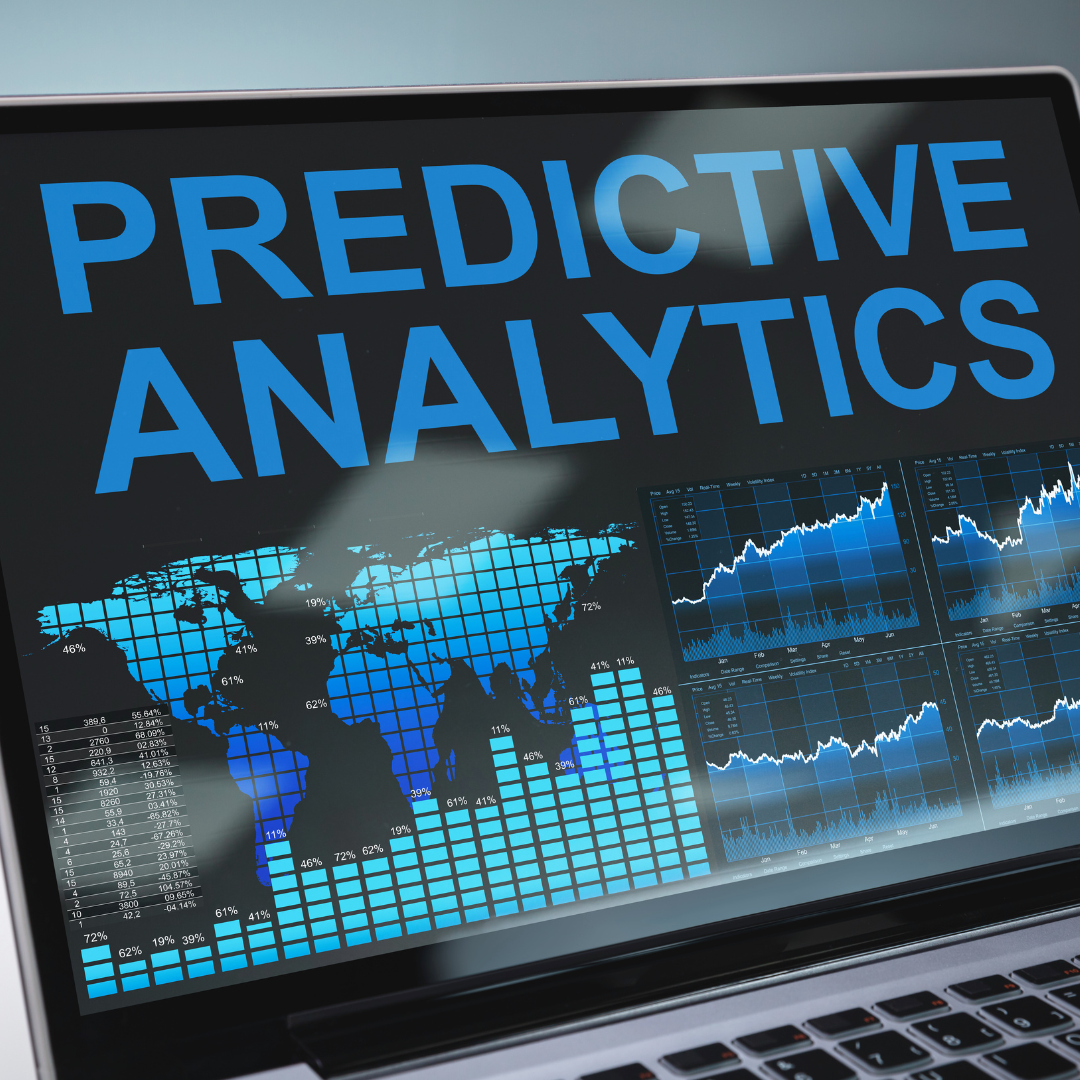
Predictive analytics plays a crucial role in business planning by enabling organisations to make data-driven decisions. It uses historical data and statistical algorithms to forecast future trends, helping businesses anticipate market changes and customer behaviour.
By integrating predictive analytics into their planning processes, companies can reduce risks and optimise strategies based on likely outcomes rather than assumptions. This approach allows for more precise resource allocation and better preparation for potential challenges.
As businesses face increasing competition and rapid market shifts, predictive analytics provides the tools needed to stay ahead. It transforms raw data into actionable insights that support smarter, more informed business plans.
Core Concepts of Predictive Analytics in Business Planning
Predictive analytics combines data-driven techniques and algorithms to forecast future outcomes. It relies on large datasets and models to help businesses make informed decisions, optimise resources, and mitigate risks.
What Is Predictive Analytics?
Predictive analytics uses historical data and statistical algorithms to estimate future events. It applies data mining and advanced analytics techniques to identify patterns and trends.
The goal is to provide actionable insights that support business planning, such as demand forecasting or risk assessment. Artificial intelligence (AI) and machine learning often enhance this process by automating model building and improving accuracy over time.
This approach shifts decision-making from reactive to proactive, allowing organisations to anticipate changes and adapt strategies accordingly.
Key Technologies and Methodologies
Core technologies include machine learning, statistical algorithms, and neural networks. These tools process vast amounts of big data to uncover relationships within the data.
Common methodologies involve regression analysis, classification, clustering, and time series forecasting. Organisations also use data mining to extract relevant information from complex datasets.
Advanced analytics platforms integrate these methods to streamline model creation, validation, and deployment. Effective predictive analytics depends on data quality, computational power, and model interpretability.
Types of Predictive Models
Predictive models vary based on the business problem and data characteristics. Regression models estimate continuous outcomes like sales or revenue.
Classification models categorise data into distinct groups, useful for fraud detection or customer segmentation. Neural networks, inspired by biological brains, are employed for complex pattern recognition in unstructured data.
Other models include decision trees and support vector machines. Selecting the right model depends on factors such as accuracy requirements, data volume, and processing constraints.
Strategic Applications and Impact
Predictive analytics plays a critical role in shaping business decisions by providing actionable insights from data patterns. This enables companies to respond rapidly to changing market conditions and optimise resource use effectively.
Enhancing Data-Driven Decision-Making
Predictive analytics empowers organisations to move beyond intuition by leveraging historical and real-time data. It identifies potential risks and opportunities, allowing decision-makers to base choices on evidence rather than assumptions.
By analysing customer behaviour, market trends, and operational metrics, companies gain precise forecasts. This improves accuracy in sales projections, inventory management, and demand planning.
Data visualisation tools combined with predictive models present clear outcomes, helping executives understand complex scenarios quickly. This reduces uncertainty in strategic decision-making and strengthens confidence in business decisions.
Improving Strategic Planning and Resource Allocation
Strategic planning benefits from predictive models that simulate various future scenarios. By forecasting potential outcomes, businesses can allocate resources more efficiently and prioritise initiatives with the highest return on investment.
Predictive analytics highlights areas of over- or under-utilisation within an organisation’s assets, enabling optimisation of capital expenditure and workforce distribution. It assists in identifying supply chain bottlenecks before they arise.
This approach supports adaptive planning, where companies continually update strategies based on new data inputs. It ensures responsiveness within a volatile business environment, maintaining alignment with market demands and internal capabilities.
Gaining Competitive Advantage
Companies using predictive analytics gain an edge by anticipating market shifts ahead of competitors. Early identification of trends allows quicker entry into emerging markets or the adjustment of product strategies.
Analysing competitor behaviour and customer preferences aids in developing unique value propositions and targeted marketing campaigns. This precision fosters stronger customer loyalty and market share growth.
Implementing predictive analytics fosters a proactive culture focused on innovation and continuous improvement. This mindset contributes to sustained competitive advantage in dynamic business landscapes.
Operational Uses Across Key Business Areas
Predictive analytics improves decision-making by analysing patterns in data to forecast outcomes and optimise processes. It supports precise resource allocation, risk reduction, and tailored customer interactions, driving measurable improvements across multiple business functions.
Sales Forecasting and Marketing Optimisation
Sales forecasting leverages predictive models to estimate future demand by analysing historical sales data, market trends, and customer behaviour. This enables businesses to manage inventory, adjust pricing strategies, and plan promotional activities more effectively.
Marketing teams use predictive analytics to optimise campaign targeting and timing. By identifying high-value segments and forecasting responses, they increase customer retention and revenue growth through personalised marketing techniques.
Automation tools further enhance marketing operations by monitoring real-time data, allowing rapid adjustments based on market conditions or competitor actions. This maximises return on investment and reduces resource waste.
Customer Segmentation and Personalisation
Customer segmentation divides clients based on behaviour, preferences, and demographics using predictive analytics. This allows more accurate targeting of offers and tailored communication, improving customer experience and loyalty.
Personalisation extends to product recommendations, pricing, and personalised care in service industries. By predicting individual needs, businesses increase satisfaction and long-term retention.
Predictive analytics also supports identifying customers at risk of churn, enabling proactive engagement efforts. This strengthens customer loyalty and enhances lifetime value with minimal additional cost.
Finance and Risk Management
Financial institutions rely on predictive analytics for credit scoring and risk assessment. Models analyse borrower behaviour and external factors to identify credit risk and reduce defaults.
Fraud detection systems use real-time behavioural data to flag anomalies and prevent losses. This enhances security and protects both customers and financial organisations.
Resource allocation in finance benefits from forecasting budget needs and cash flow trends. Risk management teams use scenario analysis to anticipate potential disruptions and mitigate financial exposure.
Operations and Supply Chain Efficiency
Predictive analytics improves supply chain management by forecasting demand, reducing stockouts and overstock situations. It identifies potential supply chain disruptions early, allowing contingency planning.
Predictive maintenance uses sensor data to anticipate equipment failures, reducing downtime and maintenance costs. Automation in these processes increases operational efficiency and employee performance.
In product development, analytics helps to identify market trends and customer preferences, guiding innovation and resource allocation. This supports cost reduction and enhances product-market fit.
Implementation Challenges and Future Outlook
Successful adoption of predictive analytics depends on maintaining high-quality data, managing organisational change, and anticipating future technological advances. Each element poses distinct challenges but also opportunities for business growth when addressed effectively.
Ensuring Data Quality and Privacy
Predictive analytics requires accurate, consistent, and complete data to deliver reliable insights. Poor data quality can skew outcomes, leading to flawed business decisions. Organisations must establish rigorous data governance frameworks, including regular audits and validation processes.
Data privacy is equally critical, given increasing regulatory scrutiny. Compliance with laws like GDPR demands strict controls on data collection, processing, and storage. Companies often invest in anonymisation techniques and encryption to protect sensitive information while using predictive models.
Balancing data accessibility with privacy safeguards remains a core challenge. Failure to manage this well can result in legal penalties and reputational damage, undermining the value of predictive analytics investments.
Integration and Change Management
Integrating predictive analytics into existing business workflows requires considerable change management efforts. Organisations often face resistance from employees unfamiliar with data-driven decision-making or apprehensive about new technologies.
Successful integration involves clear communication, training programmes, and aligning analytics tools with business objectives. It also requires updating legacy systems to support real-time data processing and analytics outputs.
Change management should focus on building analytical literacy across teams and fostering a culture open to innovation. Without this, predictive analytics initiatives risk underutilisation or failure due to poor adoption.
Emerging Trends and Future Developments
Advances in artificial intelligence and machine learning continue to reshape predictive analytics capabilities. Automated feature engineering, explainable AI models, and increased computational power are making predictions more accurate and interpretable.
Cloud-based analytics platforms are expanding access and scalability, allowing smaller organisations to adopt sophisticated predictive tools. Additionally, edge computing enables faster insights by processing data near its source.
Future developments will likely emphasise ethical AI use and tighter integration with business planning software. This evolution promises improved decision speed and quality but will require ongoing adaptation to new tools and standards.